


One register, one family
Every household is on the same record, kept by the people it belongs to.
Shree Vadodara Champaneri Modh Gnyatini Samgra Panch
Vadodara · since 1891
Since 1891: one register, one courtyard, and one another.
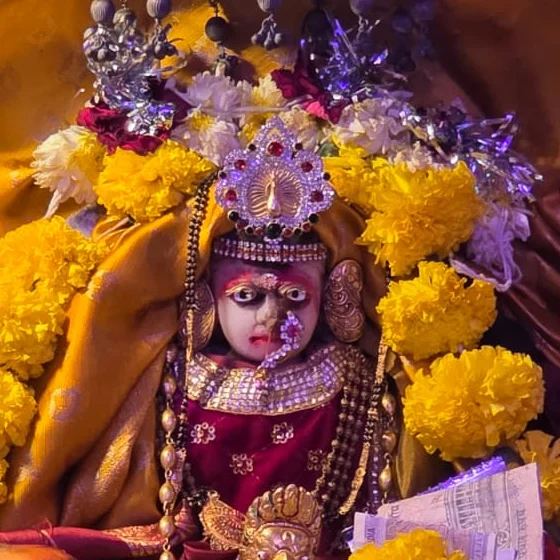
The Champaneri Modh gnyati came to Vadodara from Champaner, near Pavagadh, after the old state fell, and made a living pressing sesame oil at the ghani in house after house. Kalka Mataji of Pavagadh is our kuldevi, and we hold Modheshwari Mata of Modhera in the same faith. For a long time the samaj existed only as the families who knew each other, spread across eleven areas of the city, each with one representative on the panch - as it still is today.
It became a trust in 1891, when Ladvai Ba, who had no children of her own, willed her entire property to the gnyati and named its first nine trustees. Among that property was the Masharu Wadi, which we now call Gandhi Wadi. Everything since has been built on it: Gandhi Nivas and its shops in 1958, the Ladvai Ba hall, kitchen and office in 1988-89, and Bansi Hall upstairs in 1991-92. Much of what the panch does today is still simply keeping that place open.
The register itself has been printed three times - by the Pragati Mandal in 1955, again in 1969, and after a gap of four decades in 2010. This is the fourth edition, and the first that is not a book. What has not changed is who it belongs to. A record is a family, and a family should be able to read it, correct it, and recognise itself in it.
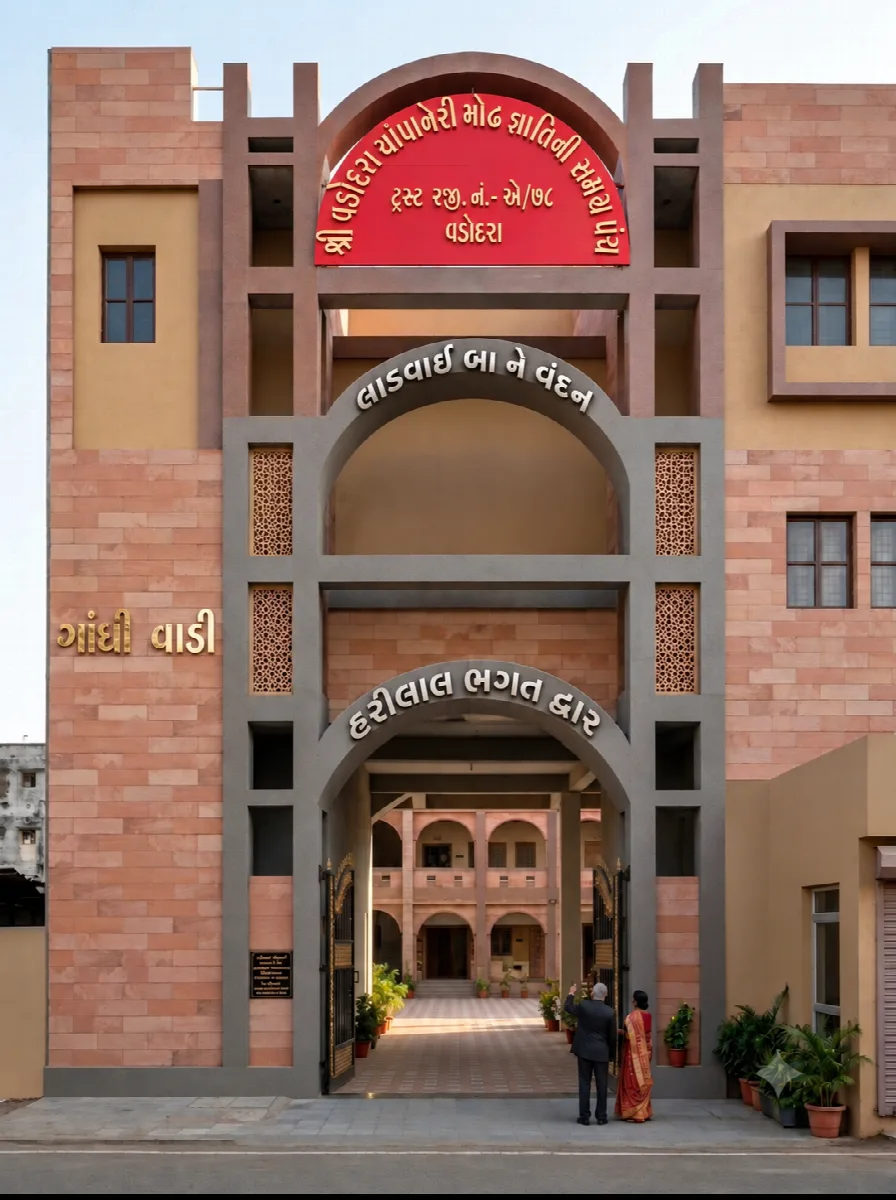
A gateway, a courtyard and a hall near Veraimata Chowk, held in trust for the gnyati. It is available to registered families for weddings, prayers, funerals and meetings at the rates the committee publishes each year.
Ask about a bookingThe dates the office still measures everything else from.
1891
Ladvai Ba, wife of Bapu Zaveri, wills her entire property to the gnyati on 21 February and appoints its first nine trustees. Among the property is the Masharu Wadi - the courtyard we call Gandhi Wadi today.
1954
On 17 January the trust passes to Mangubhai Mansukhbhai and Nathalal Chhotalal. A constitution is drawn up and the Pragati Mandal is founded to draw the gnyati's young people in.
1955
The Pragati Mandal publishes the first booklet of family details - the register in print for the first time.
1958
Land behind the wadi is bought from Shamal Bahechar and Gandhi Nivas is built on it, with shops along the ground floor let on permanent rent - the trust's first steady income.
1969
The register is surveyed and printed a second time. The same year the panch begins awarding prizes to the top three students from Std 5 to Std 11.
1988-89
Vibhag-1 is built from a house fund raised among the families: the ground-floor hall named for Ladvai Ba, the kitchen, the office and the Swagat Hall that the wadi still runs on.
1991-92
Vibhag-2 adds the hall, kitchen and rooms on the first floor, built in a little over four months by Madhusudan Natwarlal Mali, who took a nominal five per cent for the work.
2010
A fresh survey of every family after a gap of four decades. The page and serial numbers from this edition are still how the office finds a record.
2026
The fourth edition of the samaj book, and the first that is not printed. Families keep their own details up to date and the office approves every change, in Gujarati and English.
Every household is on the same record, kept by the people it belongs to.
Our customs, our language and our places are practised, not filed away.
The committee serves the panch; the panch does not serve the committee.
Young families find the samaj where they already are - on a phone.


